
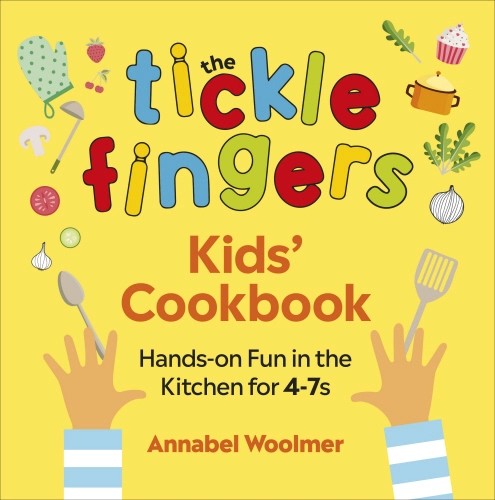
The Tickle Fingers Kids' Cookbook
Annabel Woolmer
Vermilion
Hands-on recipes for 4 to 7s, written so children can join in. A good first step for letting them crack the egg.
Find out more (opens in a new tab)
Parents vs Food
Less pressure at the table. More curiosity in the kitchen.
Food can feel like one more thing to get right as a parent. But what if we shifted the focus from what our children eat to how we involve them?
Explore practical ideas, useful research and simple ways to build confidence, curiosity and connection through food.
Food can become one of the most stressful parts of family life. One minute we're serving dinner, the next we're negotiating over a piece of broccoli.
In Parents vs Food, Dani and Tash explore a different way of looking at children's relationships with food. What happens when we involve them in the process, make room for curiosity and take some of the pressure off what ends up on their plates?
Less pressure. More curiosity. And absolutely no expectation of perfect family dinners.
Before Parents vs Food, there was Tiny Tastemakers.
Dani founded Tiny Tastemakers to give children opportunities to get hands-on with food and discover just how capable they could be in the kitchen.
Through cooking sessions and activities, she saw the enthusiasm children brought to real jobs. Cracking an egg, preparing fruit, mixing ingredients and making something to share.
It wasn't about turning children into perfect little chefs or persuading them to clear their plates. What mattered was the curiosity, independence, confidence and connection that came from getting involved.
That experience helped shape this episode and the resources we're sharing here.
Because sometimes changing the experience around food is a more useful starting point than focusing on what's been eaten.
Let your child help with something meaningful, even if it’s just washing vegetables or mixing ingredients.
Encourage exploring colours, textures, smells and ingredients without requiring them to taste.
Notice their effort and contribution, not how much they’ve eaten.
Don’t underestimate what children are capable of. Give them real opportunities, not just little jobs to keep them occupied. Open an activity for their mission, what you’ll need, three steps and a few ideas for every stage.
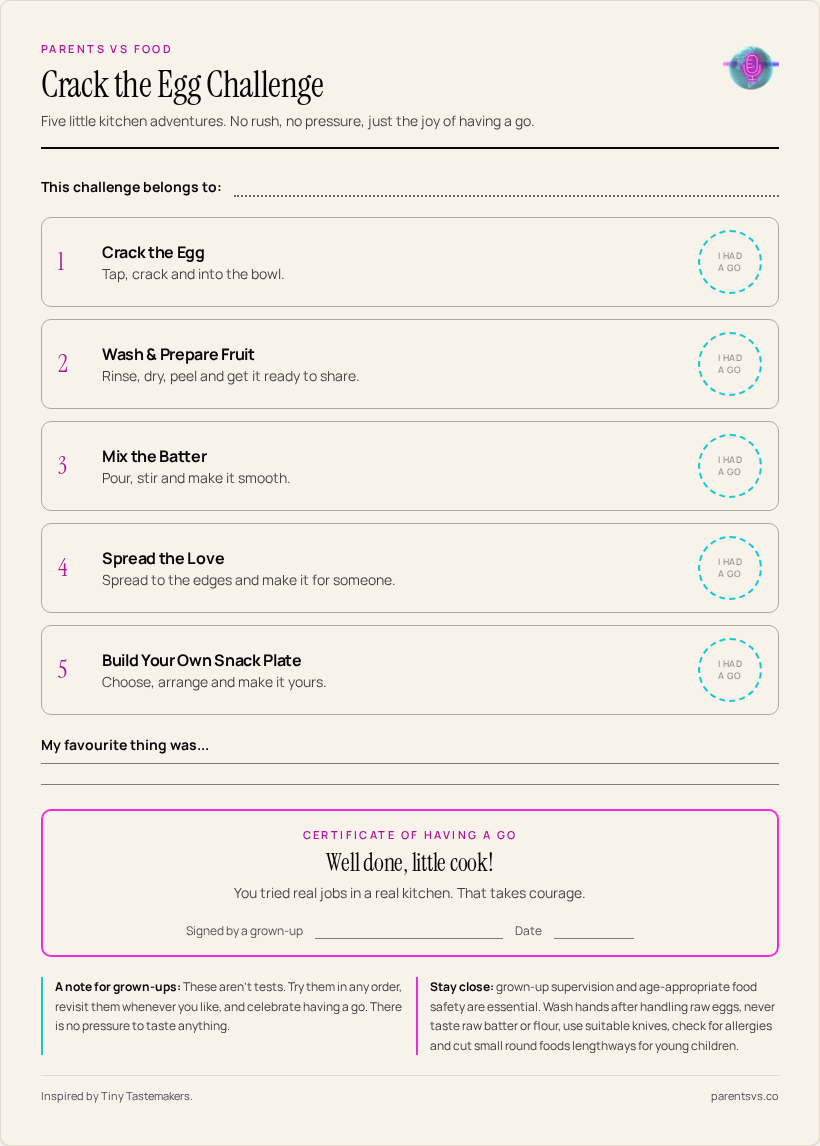
Five little kitchen adventures. No rush, no pressure, just the joy of having a go.
Print it freeSometimes it’s more than a child saying no to broccoli. Sensory differences, restricted eating, anxiety or other challenges can make food feel difficult for the whole family. You don’t have to navigate every situation with the same approach.
Food can feel completely different to different children. Smells, textures, presentation and the eating environment may all matter.
National Autistic Society eating guidance (opens in a new tab)If your child's diet is becoming very restricted, eating is causing significant distress or you have concerns about growth or nutrition, speak to your GP or appropriate healthcare professional.
These activities are invitations, not another thing to get right. If cooking together doesn't suit your family right now, that's okay.
This is general guidance, not a diagnostic tool or a replacement for professional advice.
A small number of accessible takeaways, each with its source.
A UK nursery study found that repeated opportunities to try an unfamiliar vegetable helped increase children's intake of it. There's no magic number of attempts, though, and every child's experience will be different.
Research: Repeated exposure study, 2013 (opens in a new tab)Children learn a great deal from what happens around them, including what we eat. A large review found associations between parents' eating habits and their children's food choices. Not another thing for parents to get perfect, just a reminder that everyday examples can matter.
Research: Parental influences systematic review, 2017 (opens in a new tab)Mealtimes can quickly become a battle when everyone is focused on the next bite. NHS guidance recommends not forcing children to eat food they've refused. Staying calm and offering it another time can take some pressure off.
Practical guidance: NHS, Fussy eaters (opens in a new tab)A 2024 review found children's cooking programmes often helped with cooking knowledge, confidence and involvement. Improvements in what children actually ate were much less consistent. Getting involved can be valuable even when eating habits don't immediately change.
Research: Children's cooking programmes review, 2024 (opens in a new tab)Cooking together sounds lovely. But what about the families juggling long shifts, rising food costs, limited time or a kitchen that barely fits two people? The bigger picture matters too.
How much responsibility should fall on parents, and what could schools, communities and food businesses do differently?
Lower-cost food support and community connections, with participating clubs in different parts of the UK.
Find a FOOD Club (opens in a new tab)Chefs in Schools is one example of organisations working to improve what children experience beyond the family kitchen.
See how they work (opens in a new tab)Sometimes a good book offers a different way of looking at things. Here are three worth exploring, whether you're cooking together, navigating family meals or helping little ones get curious about where food comes from.
Annabel Woolmer
Vermilion
Hands-on recipes for 4 to 7s, written so children can join in. A good first step for letting them crack the egg.
Find out more (opens in a new tab)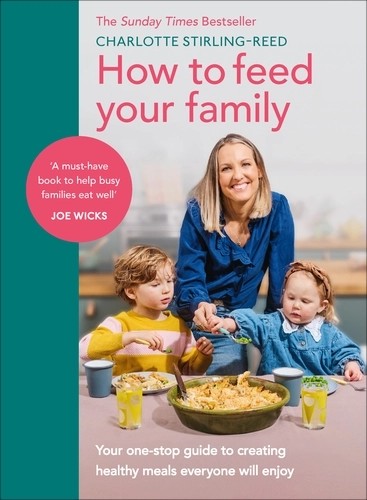
Charlotte Stirling-Reed
Ebury
A nutritionist’s guide with 70 recipes and baby and toddler adaptations, in a tone meant to take pressure off mealtimes.
Find out more (opens in a new tab)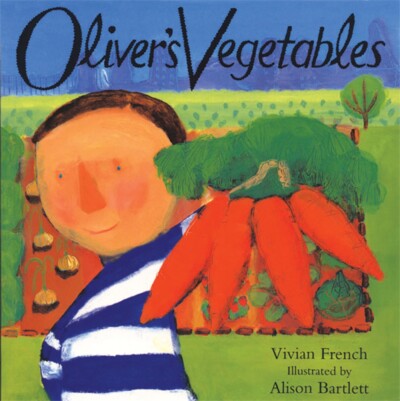
Vivian French
Hodder Children's Books
Illustrated by Alison Bartlett
A picture book where a chips-only boy finds vegetables in his grandpa’s garden. Good for growing and tasting together. He has to eat what he finds, which isn’t our approach, so it’s worth talking about as you read.
Find out more (opens in a new tab)Worth checking your local library first.
From classrooms to school kitchens, some brilliant people are rethinking how children learn about food. Here are a few initiatives we think are worth knowing about.
Food education
Helping children explore food through their senses, without the pressure to taste or like everything. A refreshing approach to building curiosity in classrooms and at home.
Visit TastEd (opens in a new tab)Creative campaigns
The people behind Eat Them to Defeat Them, making vegetables part of a playful, child-centred conversation rather than another lecture about healthy eating.
Visit Veg Power (opens in a new tab)Changing school food
Working to improve school meals and food education, because children's relationships with food are shaped by more than what happens at home.
Visit Chefs in Schools (opens in a new tab)Free learning resources
Free activities and educational resources about cooking, nutrition, growing food and where ingredients come from. Useful for parents, educators and community groups.
Visit Food a Fact of Life (opens in a new tab)From Tiny Tastemakers
Birthday coming up? Or just an excuse to get a few children around the table? We’ve started putting together ideas for hosting a hands-on cooking party at home.
Useful ideas, interesting conversations and practical resources for navigating modern family life. Straight to your inbox, without the noise.