
Bring back the landline
Let children call their friends without needing WhatsApp or social media.
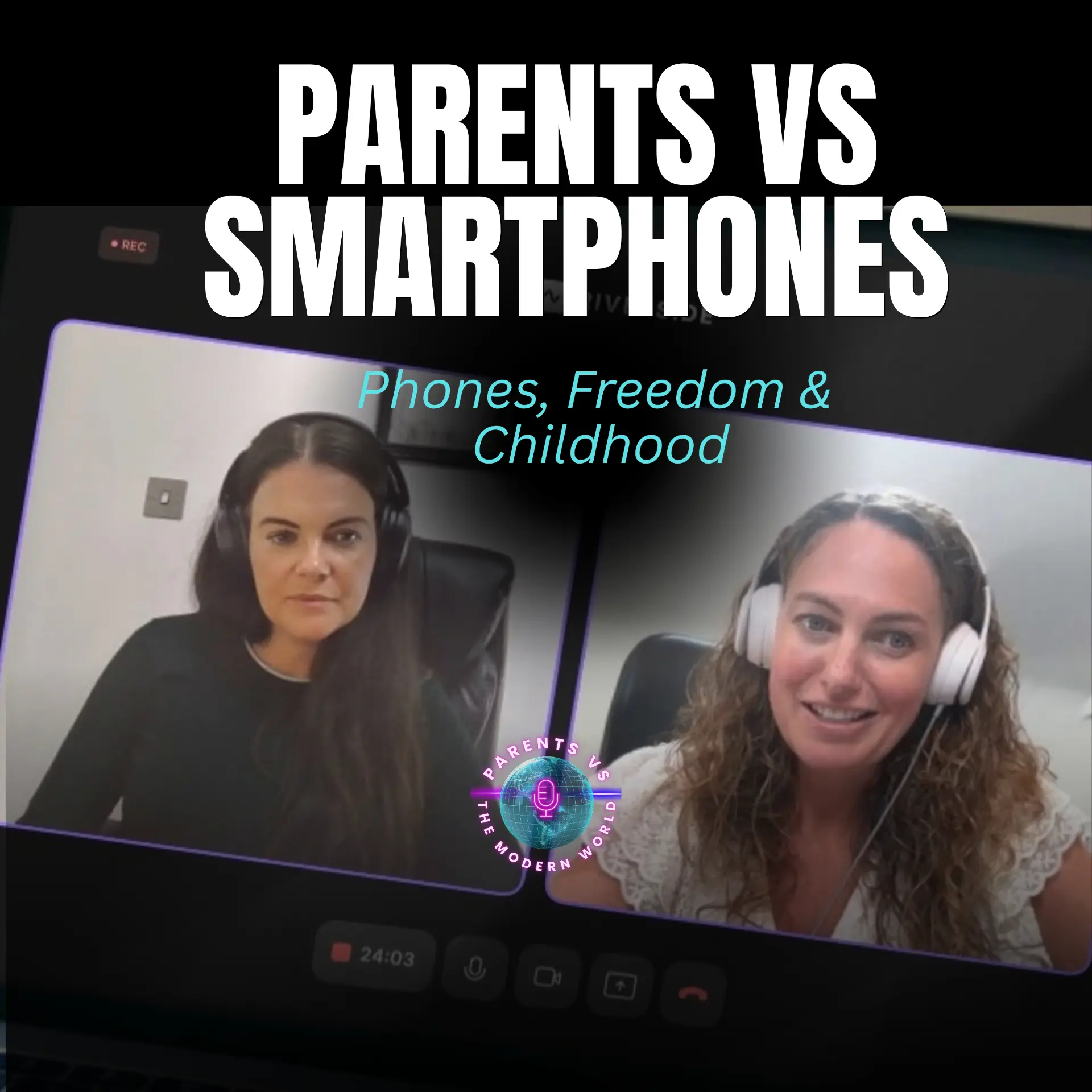
Parents vs Smartphones
What do children really need from technology, and from childhood?
Giving a child their first phone has somehow become one of the biggest decisions of modern parenting.
Dani puts Tash in the hot seat to talk safety, secondary school, social media, peer pressure and family disagreements. Underneath it all is a bigger question: what do children really need from technology, and what do they still need from childhood?
The conversation
When should kids get a phone?
There isn’t one right age. Start with what they actually need it for.
Is the bigger issue the phone itself, or the apps and social media children can access through it?
A phone and access to social media do not have to be the same decision.
What happens when your child is the only one in their friendship group without one?
Peer pressure is real, which is why conversations between families and schools can matter.
Can delaying smartphones protect childhood, or are we simply delaying something children will eventually need to learn to navigate?
Both worries are fair. Whenever a phone arrives, learning to use it can be gradual too.
What if you’ve already given your child a smartphone and want to change how it is being used?
You can revisit the apps, settings, timings and boundaries later.
Some families wait. Some start with a basic phone. Some give a smartphone with limits. Some change their minds later.
The useful question is less ‘What is everyone else doing?’ and more ‘What does our child actually need right now?’
Things to try
Let children call their friends without needing WhatsApp or social media.
Walking to friends, knocking for someone, playing out and gradually gaining more freedom offline.
Talk about what the phone is for, what the boundaries are and why you are making those choices.
Giving a child a phone does not have to mean giving them every app at the same time.
Is the phone for lifts, emergencies, messaging friends, independence, entertainment or social media? Those are different needs.
Practical help
There’s more than one way to start. Here are a few options worth exploring.
Mainly needs to call or text
A basic phone may be enough.
Needs a few more functions
A restricted or stripped-back smartphone may be worth exploring.
Already has a smartphone
You can revisit what is installed, when it is used and what access it gives them.
What do they actually need the phone for?
Calls, lifts and emergencies are different needs from entertainment or social media.
What access needs to come with it right now?
A phone does not have to mean every app at once.
What would make us feel ready to revisit the decision?
The first setup does not have to be permanent.
These are independent external resources. We haven’t tested or endorsed any particular phone.
If the current setup isn’t working for your family, you can revisit it.
A simple reset can start with:
iPhone
Apple’s built-in parental controls can help families manage apps and websites, communication, schedules, content restrictions and other device settings.
Read Apple’s guide(opens in a new tab)Android
Google Family Link can help parents manage screen time, apps, permissions and some content settings on supported Android and ChromeOS devices.
Google itself notes that filtering tools are not perfect and may not block all unwanted content.
Explore Family Link(opens in a new tab)Internet Matters
Step-by-step help for setting controls across devices, networks and apps.
Explore the guides(opens in a new tab)Sometimes the hardest part isn’t the phone. It’s getting everyone on the same page.
The bigger picture
Calls and texts are one decision. Social media, apps, internet access, location, independence and peer pressure are several others.
The research is still evolving, and experts don’t agree on exactly how much harm comes from smartphones themselves. That’s part of why there isn’t one single answer for every family.
Useful research, proper sources and no scary headlines for the sake of it.
Different books, different arguments. Worth reading side by side.

Concerns about smartphones
Jonathan Haidt
Jonathan Haidt’s book exploring the shift from a more play-based childhood towards a phone-based one.
Explore the book(opens in a new tab)
For children themselves
Jonathan Haidt and Catherine Price
Illustrated by Cynthia Yuan Cheng
Written for children themselves, bringing them into the conversation about phones, social media and attention.
Explore the book(opens in a new tab)
A different perspective
Peter Gray
A different lens on the debate. Gray argues that the loss of independence, free play and real-world autonomy deserves attention alongside concerns about screens and smartphones.
Explore the book(opens in a new tab)Worth knowing
New conversations, useful resources and the things worth knowing, straight to your inbox.
Last checked: October 2026
England
Statutory guidanceStatutory guidance says schools in England should prohibit mobile-phone use throughout the school day.
UK
Planned, not yet in forceThe UK Government plans to prevent social media services from being offered to under-16s, with implementation expected in Spring 2027.
The final regulations and implementation process are still being completed.
Australia
Early findingsChildren aged 10-15, three months after the restrictions:
Early findings only. Too soon to judge long-term impact.
A parent-led movement working to change the expectation that children automatically need a smartphone as they approach secondary school.
One movement parents may want to explore, not an official Parents vs position.
Join the conversation
Waiting? Already have one? Completely undecided? We’d love to hear how you’re navigating it.
Keep the conversation going
New conversations, different questions, same honest approach.